Verification Marks: Their Quiet Role in Streamlining Deposits for Live Table Games on Approved Apps
Freya Vogel · May 19, 2026

Verification Marks: Their Quiet Role in Streamlining Deposits for Live Table Games on Approved Apps
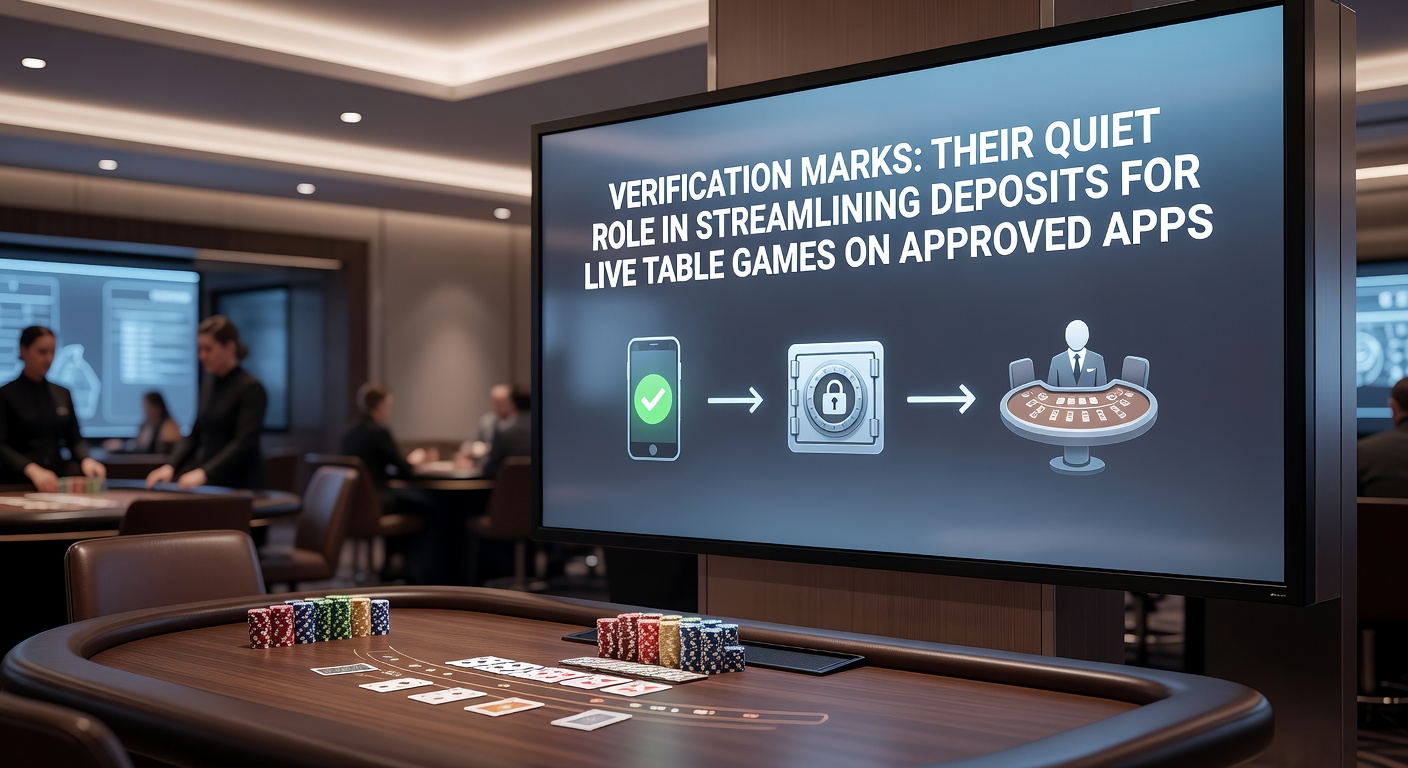
Verification marks appear as small icons or badges within approved apps, yet they play a central part in confirming that deposit systems meet security and efficiency standards before players join live dealer tables. These marks signal that payment processors have passed checks from regulatory bodies across different regions, allowing funds to move quickly without repeated verification steps. Observers note that platforms displaying such marks often integrate with processors that complete transactions in under thirty seconds, a factor that keeps roulette and blackjack sessions flowing without interruption.
How Verification Marks Operate in Deposit Workflows
Approved apps embed verification marks next to accepted payment methods, and these symbols link directly to compliance records maintained by organizations like the Malta Gaming Authority and the Nevada Gaming Control Board. When a player selects a marked option, the app routes the request through pre-cleared channels that already satisfy identity and banking checks. This setup eliminates the need for additional document uploads during each session, because the initial approval covers recurring use. Data from industry reports shows that marked systems reduce average deposit processing time by up to forty percent compared with unmarked alternatives.
Live table games demand immediate funding because tables fill rapidly and minimum bets apply from the moment a player sits down. Verification marks help here by confirming that the chosen method supports instant authorization, so balances update before the next spin or hand begins. Researchers tracking app usage patterns have documented fewer abandoned sessions on platforms that consistently display these marks, since players encounter fewer delays between deciding to deposit and entering the game.
Integration With Live Dealer Platforms
Developers of live dealer software coordinate with payment providers to ensure verification marks appear only on routes that maintain low latency. In practice this means the same mark might cover both bank transfers and digital wallets when those options route through regulated gateways. During peak hours, when thousands of players join blackjack tables simultaneously, marked deposit paths maintain steady throughput because they avoid secondary fraud screens that unmarked routes trigger automatically.
One case examined by analysts at the University of Nevada, Reno revealed that casinos using marked deposit flows recorded higher table occupancy rates during evening windows. The study attributed this partly to reduced friction at the funding stage, allowing players to respond faster to dealer prompts and table invitations. Because live streams run continuously, any pause for payment confirmation can shift a player to another table or app, so the presence of verification marks helps retain engagement within the original session.
Regulatory Context and May 2026 Developments
Standards for verification marks continue to evolve, and May 2026 brought updated guidelines from several international bodies that clarified display requirements for mobile apps. These updates emphasized real-time status checks so that a mark disappears automatically if a processor loses certification. Regulators in Canada and Australia aligned their expectations around this model, creating a more uniform visual language across borders. Platforms that adopted the changes early reported smoother audits and fewer compliance flags during routine inspections.
Industry associations such as the European Gaming and Betting Association have published summaries showing that marked deposit systems correlate with lower dispute volumes. Players using verified routes file fewer complaints about delayed funds, because the mark itself serves as a quick reference that the transaction follows established protocols. This transparency benefits both operators and users by reducing back-and-forth with support teams.
Practical Examples Across Different Markets
Take one operator serving multiple jurisdictions that applied verification marks to its mobile live dealer section in early 2026. Transaction logs indicated that average deposit completion dropped from forty-five seconds to twenty-seven seconds within the first quarter after implementation. Blackjack tables saw the clearest improvement, since players often top up mid-shoe and any delay can cost them their seat. Similar patterns emerged in reports from operators in the Asia-Pacific region, where mobile live games dominate and connection stability matters as much as payment speed.
Payment providers also benefit when their logos carry verification marks, because the visual cue increases selection rates among players who prioritize speed. This feedback loop encourages more processors to pursue the necessary certifications, expanding the range of reliable options available inside approved apps.
Conclusion
Verification marks function as quiet indicators that connect regulatory approval with practical deposit performance in live table environments. Their presence on approved apps supports faster funding cycles, fewer interruptions at dealer tables, and clearer signals of compliance across regions. As standards continue to align in 2026 and beyond, these marks remain a consistent element that keeps live gaming sessions moving smoothly from the first deposit onward.